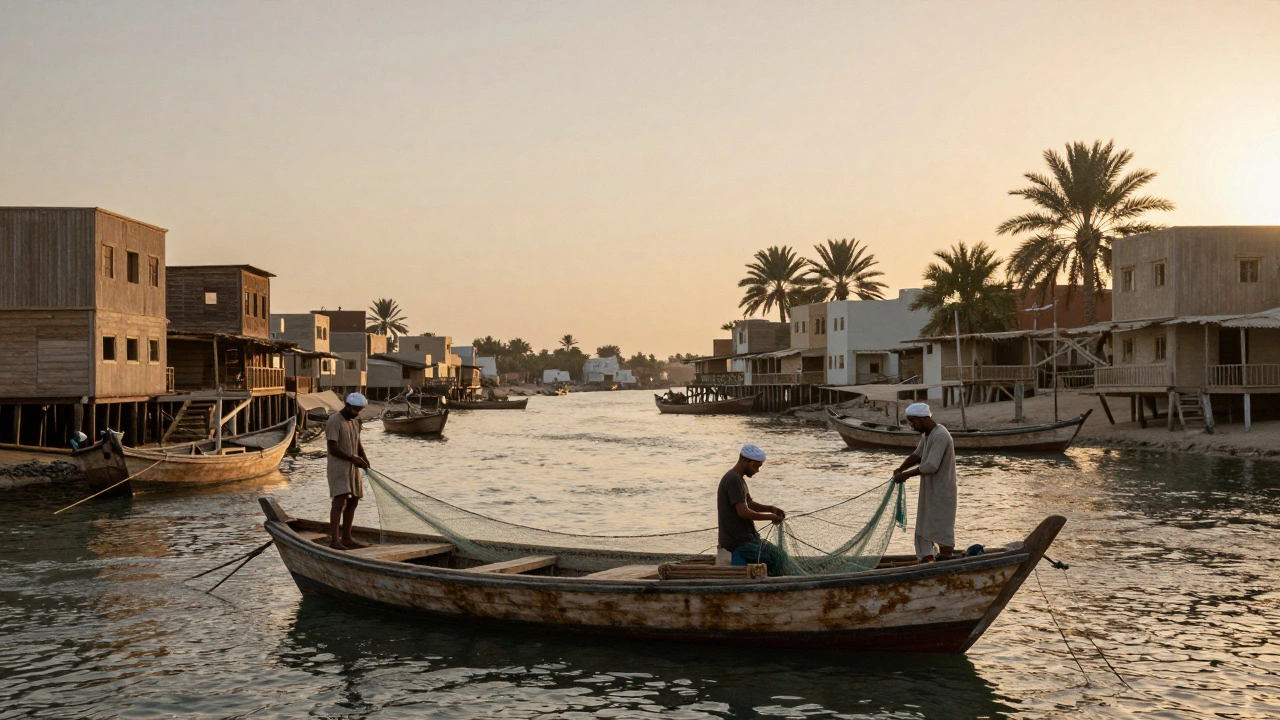
Dubai isn’t just glass towers and desert safaris. Long before the Burj Khalifa scraped the sky, this land was a quiet fishing and pearling village, shaped by monsoon winds and tribal trade routes. The city you see today didn’t rise from nothing-it grew from centuries of resilience, adaptation, and quiet endurance. While the skyline screams modernity, the alleys of Al Fahidi and the salt-worn stones of Al Shindagha still whisper stories of merchants, sailors, and families who built something lasting out of sand and sea.
Some online searches lead people to strange places-like sex service in dubai-but those are shadows, not the substance of this city. Dubai has strict laws against prostitution and public indecency. There is no official "dubai red light area name" because no such zone legally exists. Any claims otherwise are either outdated rumors or deliberate misinformation. The UAE enforces its moral and legal codes with consistency, and violations carry serious consequences.
How Dubai’s Past Shaped Its Present
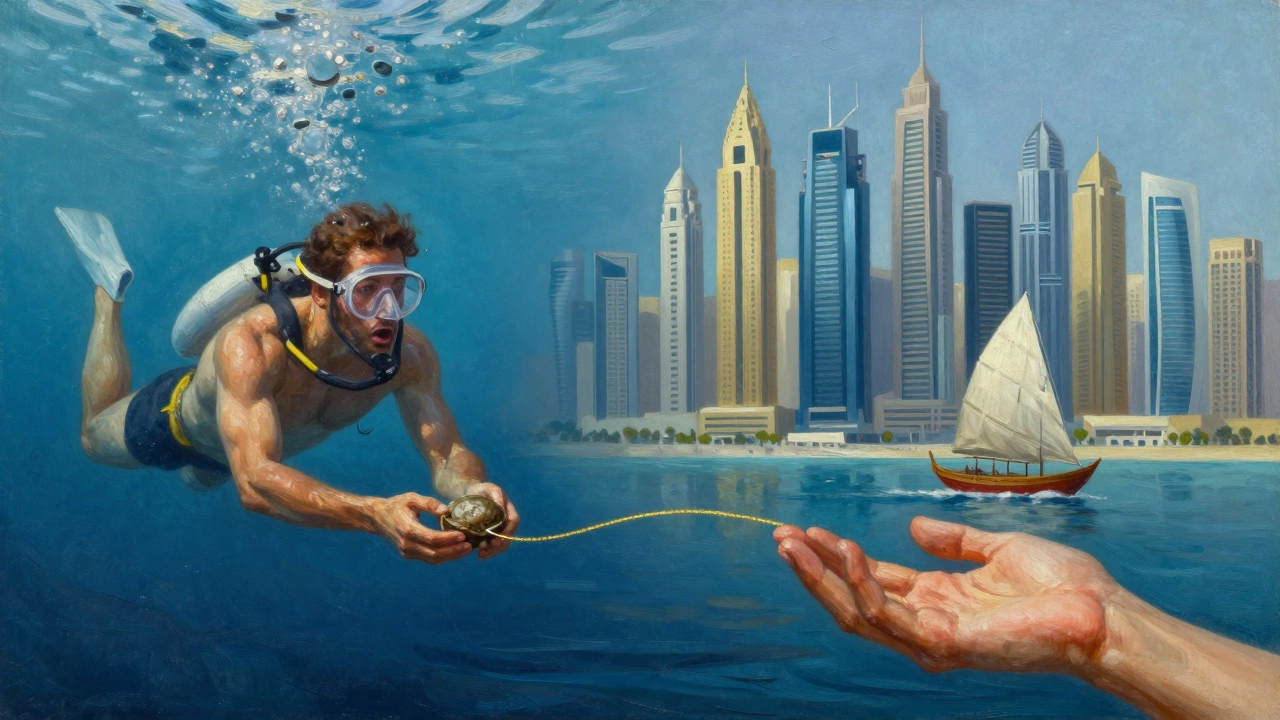
In the 1950s, Dubai’s economy relied almost entirely on pearl diving. Divers would plunge 30 meters without oxygen, holding their breath for up to two minutes, often returning with broken eardrums or lung damage. When synthetic pearls flooded the market in the 1930s, the industry collapsed. Thousands were left without income. That crisis forced a rethink. Sheikh Rashid bin Saeed Al Maktoum, Dubai’s ruler at the time, began investing in trade infrastructure. He dredged the creek, built docks, and welcomed merchants from Iran, India, and East Africa. By the 1970s, Dubai had become a regional hub for re-export.
Oil found in 1966 changed the game, but Dubai didn’t wait for it to run out. While other Gulf states hoarded oil wealth, Dubai reinvested it-into ports, airlines, real estate. It built Jebel Ali Port, the largest man-made harbor in the world. It launched Emirates Airlines when most thought the Middle East didn’t need another carrier. It didn’t just survive change-it engineered it.
Cultural Roots You Won’t See on Instagram
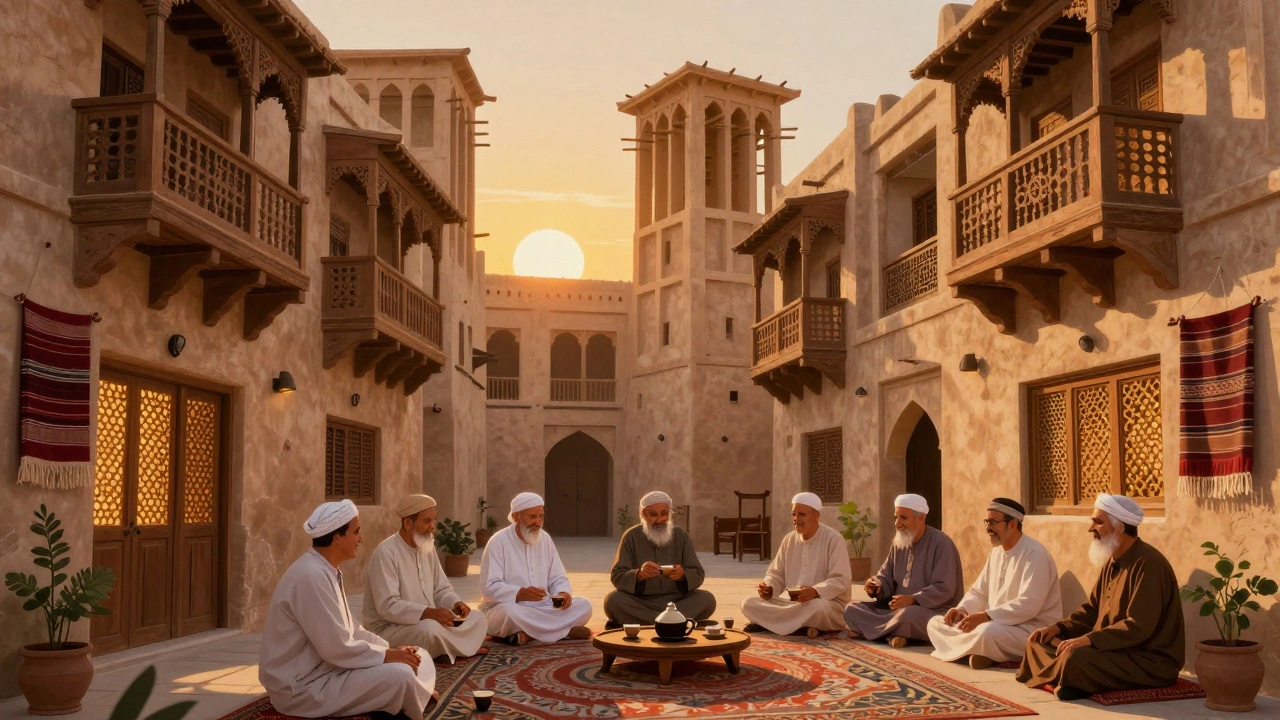
Walk into the Dubai Museum inside Al Fahidi Fort, and you’ll find a diorama of a traditional majlis-the gathering space where men discussed politics, poetry, and trade. Women had their own spaces, often centered around coffee rituals and embroidery. These weren’t just social habits; they were systems of trust. Deals were sealed with a handshake and a cup of cardamom coffee. The concept of "honor" wasn’t abstract-it was economic. Your word was your collateral.
Today, you can still see this in the way Emirati families host guests. Even in luxury malls, you’ll find quiet corners where elders sit with tea, talking slowly, listening more than speaking. This isn’t nostalgia. It’s continuity. The same values that kept families alive in the desert now underpin how businesses operate here: relationships over transactions, reputation over speed.
The Reality of Law and Order
The UAE doesn’t have a "sex workers in uae" scene because the law doesn’t allow it. Prostitution, solicitation, and related activities are criminal offenses under Federal Law No. 3 of 1987. Penalties include fines, imprisonment, and deportation for foreigners. Even private arrangements between consenting adults are not protected under the law. Police raids on suspected establishments happen regularly, and enforcement is not selective.
That doesn’t mean people don’t try to exploit loopholes. Some foreign workers, especially those in vulnerable situations, are pressured into illegal activities. But the government’s response is not silence-it’s action. Agencies like the Dubai Police’s Human Trafficking Unit work with NGOs to rescue and rehabilitate victims. There are hotlines, shelters, and legal aid services available. The system isn’t perfect, but it’s active.
Why the Myths Persist
Why do stories about hidden red-light districts or underground sex markets keep popping up? Partly because of tourism marketing. Some websites and blogs paint Dubai as a wild, lawless playground to attract clicks. Others feed on exoticism-turning a conservative society into something it’s not. These narratives ignore the reality that Dubai’s identity is built on discipline, not decadence.
There’s also the global double standard. Cities like Amsterdam or Berlin have regulated adult industries and are open about them. Dubai doesn’t. That difference gets misread as secrecy or hypocrisy. But it’s not. It’s cultural integrity. Dubai’s laws reflect its values, not Western norms. And most locals wouldn’t have it any other way.
What Visitors Should Actually Explore
If you’re curious about Dubai’s history, skip the flashy malls and head to the Al Fahidi Historical Neighbourhood. Visit the Coffee Museum. Take a dhow cruise along the creek at sunset. Talk to the shopkeepers in the Gold Souk-they’ll tell you how their grandfathers traded pearls for silver in the 1940s. Attend a traditional Emirati wedding if you get the chance. You’ll see dancing, poetry, and food served with ceremony.
Or visit the Dubai Heritage Village, where artisans demonstrate weaving, date palm frond crafting, and traditional boat-building. These aren’t performances for tourists-they’re living skills passed down through generations. The people who keep them alive are proud. They don’t want you to see a fantasy. They want you to understand their truth.
Final Thoughts
Dubai’s strength isn’t in its skyscrapers. It’s in its ability to hold onto identity while moving forward. The city didn’t erase its past to become modern-it folded its history into its future. You can’t find a red-light district here because the city chose not to build one. It chose education over exploitation, trade over temptation, community over chaos.
That’s the real story. Not the ones pushed by shady websites. Not the myths spun to sell clicks. The real Dubai is quieter, deeper, and far more impressive.